


Amid the war and sirens: Hundreds of families came to receive Passover food packages in Lod
This article was translated and adapted from an article posted on Ynet 23/3/26
Amid sirens and a shortage of volunteers, thousands of food packages were prepared and distributed to needy families in Lod ahead of Passover. The president of the “Yad B’Yad” association in Lod, Rabbi Yaakov Gloiberman, said: “There is also an internal war, the war against poverty, and we must not lose it.”
People arrived this morning (Monday) at the warehouses of the “Yad B’Yad” association in Lod. With downcast eyes, they stood in line, patiently waiting for their turn to receive a box of food, one that will serve as a central part of their holiday meal.
The association’s president, Rabbi Yaakov Gloiberman, described the difficult reality in a conversation with Ynet:“We are at war with a bitter enemy and are succeeding thanks to our brave soldiers, may God bless them. But damn it, where is our state in the war against poverty? I encounter families sitting in shelters with nothing to eat. Here we are before Passover, and between sirens we are working day and night to provide families with food boxes, which unfortunately they are forced to come and receive.”
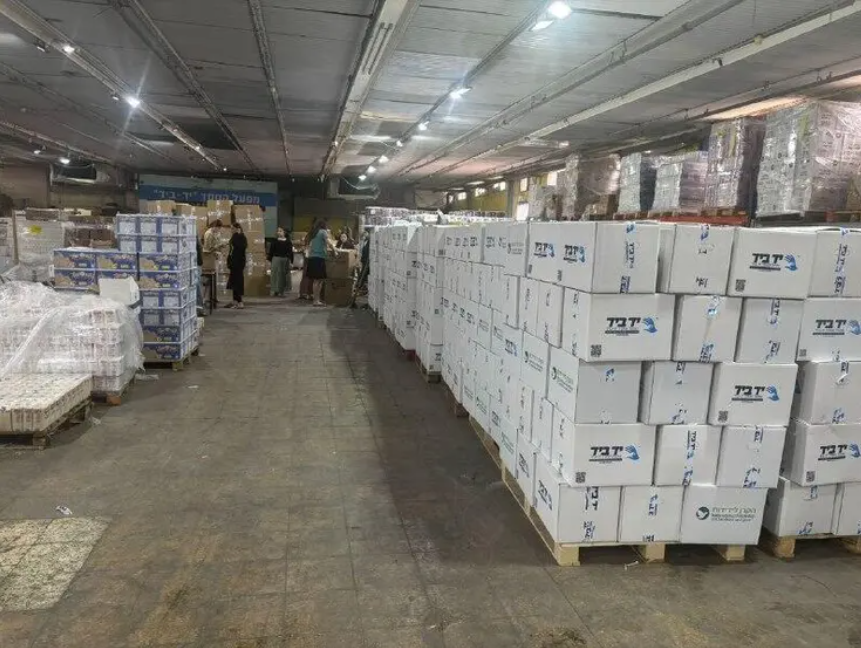
This year, the organization prepared about 7,000 food boxes in two sizes, for small and large families. The boxes include fresh fruits and vegetables, fish, chicken, wine, matzah, canned goods, and basic food staples. According to Rabbi Gloiberman, this represents savings of hundreds of shekels per family, an especially significant amount for those forced to choose between basic necessities.
Rabbi Gloiberman, who has been distributing food packages for 26 years as part of the organization’s work in Lod, sharply criticized the authorities: “The state is not there for needy families. We succeed thanks to donors, especially the International Fellowship (Keren HaYedidut), which helps us. The Welfare Ministry, for the last Rosh Hashanah, contributed only three shekels per food package, when the cost of a package reaches 200–300 shekels, including fresh and respectable food. Unfortunately, the state is abandoning those who need it.”

The complex reality of wartime was also felt on the ground. Missiles that fell in Lod not far from the organization’s warehouses, along with an enormous volume of purchased goods, created another challenge, a severe shortage of volunteers. “Thank God we raised donations and purchased huge quantities of food, but we didn’t have volunteers,” said Rabbi Gloiberman. “Workplaces that had committed to come with employees didn’t show up. People stayed home with their children, or workplaces simply closed.”

Those who came to help at the last moment were students from grades 7–12 at the “Noam Tzvia Elishiv” yeshiva in Lod and students from Ulpanat Tzvia, who mobilized for the packing operation. “Since last Thursday, at the very last moment, the students arrived and simply saved the situation,” said Rabbi Gloiberman. Alongside the yeshiva students, young people from abroad also arrived and volunteered in Israel through the “Yahel” organization, joining the complex logistical effort.
The students placed the products on a conveyor belt and filled the boxes at a rapid pace. Gradually, thousands of boxes were stacked, ready for distribution, and yesterday morning the distribution began. Each day, up to 500 families arrive to collect food packages, and at the same time the organization sends boxes to local authorities across the country. Distribution is expected to continue into next week.
Itiel Shmerling, a yeshiva student, said: “Since the start of the war we’ve been at home. A message went out in WhatsApp groups to come and help. Dozens of students came to pack for needy families. It’s a great joy and a big privilege to be part of this chain of giving, especially when there are families who have nothing and unfortunately need to receive a food box for the Passover Seder night.”
Despite the sirens, the manpower shortage, and the heavy workload, the organization managed to complete the mission. But for Rabbi Gloiberman, the bigger picture remains worrying: “The war outside continues, but there is also an internal war, the war against poverty. And that is one we must not lose.”


floor plan maker seems like a fitting tool for organizing the logistics of such a large-scale distribution effort. It's moving to read about the families waiting patiently in line, especially with the added context of sirens and a volunteer shortage. The quote from Rabbi Gloiberman about the "war against poverty" really puts the importance of this work into perspective.
photo colorizer highlights a powerful story about community resilience. It's striking to read about people lining up for food packages even with sirens wailing, showing how the fight against poverty continues alongside everything else. The dedication of the volunteers and the dignity of those receiving help is really moving.
planliva highlights the difficult reality for so many families in Lod. It’s powerful to read about the community’s effort to fight poverty even while facing sirens. The description of people waiting patiently for their holiday food boxes really underscores the need.
Reading the article on popemote, the quote about the "internal war against poverty" really stood out. It’s heartbreaking to picture people waiting in line with downcast eyes, but it’s also powerful to see a community coming together like this.
This free photo enhancer came at the perfect time as I was looking for a simple way to improve some old family photos. It's a handy tool for making those quick edits that really bring out the details.