


Making Art During a War
- Alexandra & Abi
- 11 minutes ago
- 5 min read
This blog post details a view from the ground during the Iran conflict. It was written by Alexandra Okeson-Haberman and Abigail Davis, two of our 2025/26 Fellows in Rishon LeZion.
Alexandra's view
Sirens blasting. People yelling. The smell of smoke. Going to a public shelter isn’t physically difficult for me (though it is for some people), but it is an intense experience and we’ve had this experience several times a day during the first four days of the war.

Abby and I are both Americans in our twenties. We are volunteers in Ramat Eliyahu on the Yahel Social Change Fellowship. On any given Sunday, Monday, Tuesday, or Wednesday we are volunteering at one of our several regular volunteer placements. With our normal placements closed because of the war, we wanted to continue to do what we came to Israel to do: to help in any way that we can. Right now, that looks like a pack of markers and sheets of blank paper.
After waking up to the first siren at 8 in the morning on Saturday, I grabbed what art supplies I had laying around the apartment and packed them into the beach bag my grandmother gave me before I left for Israel. I had no coherent or well-thought out plan; I merely sat down in the bomb shelter and pulled out paper, coloring pencils, and markers.
And then the kids came. There were a few at first and then more. Now I have a group of regulars who come up to me whenever I sit down. They know the drill: I hand out sheets of blank paper and they grab whatever markers or colored pencils they want. And what do the children choose to draw in a bomb shelter? The answer may surprise you. Some kids have drawn their favorite numbers, 6 and 7, taken from a currently trending internet meme. Other kids draw rainbows or houses. Sometimes kids want us to draw Angel from Lilo and Stitch. Many children have drawn hearts.

It is not always easy. Sometimes the kids misbehave; two kids threw colored pencils at each other and sometimes siblings bicker. Oftentimes it’s quite a chaotic scene in the bomb shelter and our little circle of art is just one island among many in a turbulent sea. The public shelter is loud. It’s sometimes hard to hear the kids sitting just a couple feet away from me — let alone understand the Hebrew they are speaking. And yet, I understand something clearly right now: chaotic as this may be, I am glad to be in Ramat Eliyahu right now. I’m glad to be with the kids (some of whom I had known from volunteering before and some of whom are new). I’m glad to be able to do a small thing to help distract kids and make it easier for their parents who might be watching several kids at once, and who are almost certainly running on too little sleep and too much stress.
We’re all living in this upside-down, topsy-turvy world right now, and yet some things seem more than alright. There was an older man who folded paper frogs with kids; another folded paper airplanes. A woman whose name I don’t know gave me a bucket of coloring supplies for the kids. Someone handed out lollipops to the children. A representative from the municipality of Rishon LeZion came with a bag of art supplies and a roll of giant coloring pages. Parents soothe their children and the children of others. Amidst the fear and uncertainty I can feel the pulse of the community: the love and the vibrancy that deserves a chance to unfurl into the light, unhindered by sirens.
Right now everyone is on edge. I can see it in the faces of the adults. I can tell by the bottles of alcohol I see people buy at the nearby store and the mischief that the children in the bomb shelter get into. I see the faces of kids who look so much like their parents: tired and resigned to another sleepless night in the shelter. This is the reality for children in Ramat Eliyahu.

The reality of this moment, means being surrounded by others who are experiencing the same fears and thinking the same worrying thoughts. It means having to decide between sleeping in the public shelter overnight and possibly not being able to sleep well and potentially having to run (perhaps multiple times) to the public shelter in the dark because you’d rather sleep in your own bed.
Right now I am trying to stay positive for the kids and to not let my fear be too visible. I am focusing on the little things I need to do: cleaning up the art supplies once people begin to leave the public shelter, refilling art supplies into my to-go bag, and congratulating children on their artwork.
I am running on little sleep, a lot of stress, and so many smiles. For now, that is enough.
Abigail's view
My daily routine during the war with Iran looks a lot different than it did before. Alexandra and I usually wake up to a red alert in Ramat Eliyahu. We grab bags of paper and markers, text our supervisor to confirm we got the alert, then each jog to a nearby shelter and start laying out art supplies. As the sirens start, our neighbors pour into the shelter. In Ramat Eliyahu, residents pile into an underground community shelter. The families with kids run down first, then older residents make their way down the stairs. The kids come in Purim costumes—princesses, police officers, and superheroes come over and grab markers. The parents strike me the most. Their mouths are smiling; their eyes are tired, and never move off of their children. We draw and make paper airplanes for 10 minutes, then people begin to drift out of the shelter. Sometimes another alarm sends everyone back into the shelter before we finish cleaning up markers; other times we get to go home for a few hours.

I think I know why the adults are so tired. When we come into the shelters at night, we find many families trying to sleep on the floor. In one shelter, a mom has curled herself up around the plush princess couch her 4-year-old daughter is sleeping on. The daytime is hard too. When we leave the shelter, our phones send news headlines about war and missile strikes. When we go home, we don't know when the next red alert will come. Every unexpected noise can sound like an explosion and every song or ringtone like a siren at first. I imagine this must be so much worse to hear as a parent, constantly watching and counting your kids to make sure they are all close enough to pull into a shelter at any moment.

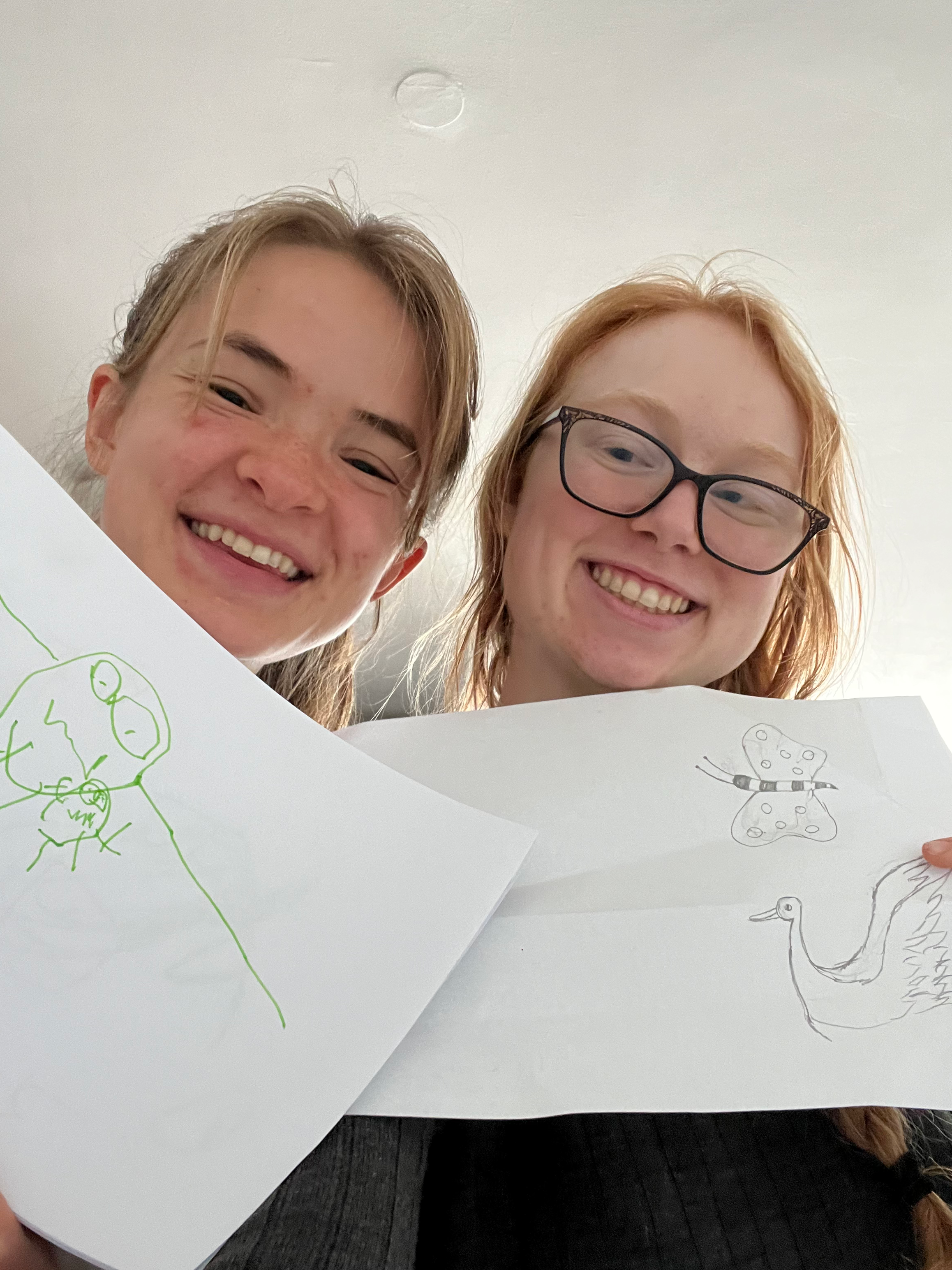
The community members are taking care of each other through this. On Saturday morning a mom and her daughter came on Saturday morning with fresh pancakes. Yesterday, I saw a woman pouring cups of buna, Ethiopian hospitality coffee, in the shelter. And someone dropped off a giant jar of pens and pencils, presumably from their desk at home. It really helps me to be with kids in the shelter. They smile and giggle, and the preschoolers draw green people with too many limbs, while the 10-year-olds study the cartoon characters on their shirts to reproduce the same drawings on the paper. We are weaker as individuals because of the war. I feel exhausted from 2am bomb shelter runs and the stress of not knowing when the next alert will sound.
But as a community, we are stronger. For better or worse, we gather multiple times a day with nothing to do but talk, draw, and share.
Thank you for reading this blog post. In this critical moment, our fellows are stepping up across the country. You can follow their journey and witness their incredible impact on our Instagram page below.
Additionally, if you wish to follow in the footsteps of incredible young changemakers like Alexandra and Abigail, visit the Fellowship website, also below.


Comments